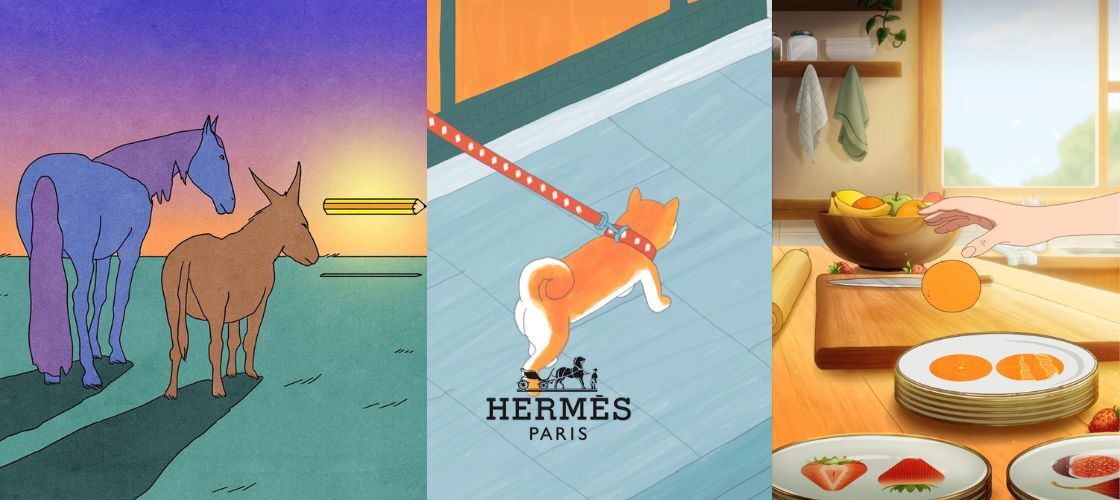
Hermès and the Shift From Seasonal Campaigns to Seasonless Cultural Worlds
What’s happening with Hermès
- Hermès commissioned nearly 80 creatives - illustrators, animators, artists, to generate social-content aligned with “Drawn to Craft.” That means instead of traditional product shots or celebrity ads, you get a mosaic of artistic interpretations keyed to craft, heritage and creative vision. (GQ India)
- The content palette is broad: from illustration and animation to surreal sculpture, paper-art, dreamlike reinterpretations of heritage items (bags, watches, scarves), to immersive, story-driven visuals. (newwavemagazine)
- Hermès isn’t pitch-selling, it’s curating. Their social feed becomes a “curated exhibition,” turning Instagram (and other digital channels) into a slow-luxury gallery where the brand’s DNA (craft, heritage, artisanship) is re-stated through different creative voices rather than repetitive product adverts. (The Impression)
Taken together, this isn’t a one-off campaign. It’s a deliberate repositioning of how Hermès expresses its value in a digital age: as a patron and curator of craft-driven creative culture.
What this means for brand collabs and why it matters
- Collaboration as cultural authorship, not just endorsement. By commissioning artists (not celebrities), Hermès transfers narrative control to creators giving them authorship over how the brand’s heritage is reimagined. The resulting content feels less like advertorial and more like cultural commentary or art. For creative audiences, that’s far more resonant and shareable.
- Diverse talent enables broader cultural reach. A mix of global artists - illustrators, animators, sculptors brings in varied subcultures, aesthetics, and sensibilities. That gives Hermès access to different creative communities, sub-audiences, and niches - from digital art fans to craft purists to aesthetic connoisseurs. In other words: you don’t just amplify reach; you diffuse the brand identity across culture-adjacent ecosystems.
- Craft + narrative = value anchor. In a time when “luxury” is increasingly scrutinized for its price vs. substance, showing actual craft or an honest nod to it, via artists and storytelling becomes a way to signal legitimacy. The collaboration isn’t selling a price tag; it’s selling a belief system: that quality, patience, and human touch still matter.
- Seasonless storytelling > seasonal drops. Instead of linking collabs only to new products or seasonal launches, Hermès keeps the story alive year-long through content that celebrates craft itself. That means the “brand moment” isn’t a launch it’s an ongoing conversation. Collabs like these function as evergreen brand cultural activity rather than time-boxed advertising blitzes.
Strategic Lessons & What Other Brands (Especially Craft-Oriented or Heritage-Driven)
Should Learn / Avoid
| What to Do |
What to Watch Out
“Craft-washing trap” |
|
Build collabs around artists, artisans, creators – not just influencers or celebrities.
Let creative voices define or re-interpret the brand identity.
|
Don’t treat “artists” as stylised props; if the brand has no real tie to craftsmanship or
heritage, this risks being superficial or hollow.
|
|
Use craftsmanship and heritage as evergreen content pillars – weave them into
ongoing storytelling instead of seasonal promos or trend-hopping.
|
Avoid turning “craft” into a hollow marketing veneer or buzzword with no real investment or
transparency behind it.
|
|
Curate diverse creative languages (illustration, animation, sculpture, mixed media)
– to reach varied cultural niches and build a richer ecosystem around the brand.
|
Resist over-curating a “safe, polished” feed that voids the creative rough-edges and authenticity
artists bring. Over-polished = over-processed = inauthentic.
|
|
Let collaborations add cultural value – not just product value.
Art + story + world-building = deeper emotional resonance.
|
Don’t use artists just to “decorate” products; the collaboration must feel meaningful,
not merely decorative or transactional.
|
What This Signals for Strategic Brand Thinking - Especially for Designers & Boutique Labels
Real value lies in process, presence, and storytelling not in trends or hype.
For a boutique, design-led studio or brand:
- Collaborations needn’t be about product-driven drops; they can be conceptual, cultural, allegorical. A handcrafted watch case becomes not just a product but a story of time and ritual.
- You can use collabs as cultural punctuation, not just marketing noise. A well-placed collaboration with a creative you respect can amplify your brand’s voice and values more powerfully than traditional campaigns.
- In a world of algorithmic sameness, authenticity built on craft, respect for heritage (real or chosen), and quietly executed artistry becomes the ultimate differentiator.
Because as Hermès shows, the power lies not in showing what you make, but in inviting others to see the making itself.
The 7-Step Collaboration Framework
Inspired by Hermès’ “Drawn to Craft” adapted for emerging & boutique brands
01: Define the Cultural POV, Not the Campaign
Instead of starting with “What product are we promoting?”
Start with:
- What cultural belief does our brand stand for?
- What tension in culture are we responding to?
Example: Craft vs. Speed. Analog Intention vs. Digital Overdrive. Quiet Luxury vs. Loud Marketing.
This becomes the theme, the spine for collaboration.
02: Build a Curated Creator Ecosystem
Commission independent creatives (not influencers) who naturally align with that belief system.
Mix intentionally:
- Visual artists (illustrators, printmakers, sculptors)
- Photographers / filmmakers
- Musicians / poets / writers
- Digital / AI artists
- Craft practitioners
Goal: Build a cultural world not a campaign asset.
03: Give Creators Authorship, Not a Brief
Instead of dictating deliverables:
- Share your philosophy
- Share your origin story / lineage / process
- Share materials, textures, rituals
- Invite reinterpretation
The artist must not decorate, they must interpret.
This is how you build culture instead of ads.
04: Turn Platforms Into Stages
Don’t publish like a content calendar.
Publish like a curated exhibition.
Examples:
- Instagram feed becomes a rotating gallery wall
- Reels = behind-the-craft mini-documentaries
- Website section = archive museum
- Pop-up physical or virtual installation
- Limited prints / zines / postcards
Ask: How can digital feel like a museum instead of a catalogue?
05: Celebrate Process, Not Perfect Output
Show the making - sketches, failures, drafts, tools, hands.
Why it matters:
- Process = emotional intimacy
- Imperfection = trust
- Transparency = modern luxury marker
06: Let Product Be the Conclusion, Not the Opening Act
Product should appear like a natural payoff of the story.
Not the reason for the story.
The best luxury doesn’t shout, it reveals.
07: Build Seasonless Cultural Momentum
Don’t stop at a “campaign period.”
Turn this into:
- Annual thematic cycles
- Artist residencies / fellowships
- Ongoing creator partnerships
- Art direction themes as brand chapters
Think journal, not magazine issue.
The Collaboration Outcome Model
(How to measure success in this framework)
| Traditional campaign |
Craft-led collaboration strategy |
| Views, impressions |
Cultural equity, artistic credibility |
| Influencer reach |
New creative communities and subcultures |
| Conversion spikes |
Long-term brand value and emotional depth |
| Trend chasing |
Timeless and seasonless storytelling |
| Product focus |
Philosophy focus |
Why This Matters Now
In a world drowning in content: Brands don’t need more noise, they need meaning.
And meaning emerges when you:
- Give creative power away
- Stand for something deeper than an algorithm
- Build cultural context around the work
- Invest in process instead of performance
That’s what Hermès just demonstrated.
Luxury is no longer about owning objects. Luxury is about owning perspective.